Carpet Cleaners Warehouse

CCW Logo 2017 sml

Carpet Cleaners Warehouse - Our partners for the Restoration and Professional Contract Cleaners industry at Carpet Cleaners Warehouse.

Find all of the Cleantrust Range including Anaeron CleanTrust Luminometer, ATP Surface and Water Swabs, Protein and Protein Allergen Swabs and Incubator.

Contact them at https://ccwonline.com.au/pages/contact-us or This email address is being protected from spambots. You need JavaScript enabled to view it.

How to Properly Clean your Workspace

How frequently do you clean up your office? You might be surprised to learn that, despite having over 10 million bacteria living on them, just 20% of people worldwide regularly clean their workstations.

Your productivity will suffer if your desk is cluttered. According to research published in Frontiers in Psychology, there is a strong correlation between our physical settings and our emotions, cognition, and behaviour, which affects how we make decisions and interact with others at work. Your workstation has 400 times more bacteria on it than a toilet seat, claims a University of Arizona research! Not at all. In actuality, there are about 10 million bacteria living in the space where your hand rests on the desk. This makes Hand Hygiene even more important than ever.

Consider this: bacteria is waiting on the surfaces you touch, and it is simple to spread it from one surface to another, regardless of how frequently you wash or sanitise your hands. We touch our phones close to 3,000 times every day on average, making our pockets a constant source of bacteria, germs, and viruses. Given that many modern organisations use shared workspaces or "hot desk" setups, this reality is all the more terrifying. Maintaining your workspace should be a crucial part of your daily routine, regardless of whether you work from home or have a designated desk.

Cleaning your desk every day is crucial for preventing disease and removing dust. Additionally, keeping your office tidy will increase productivity, efficiency, attention, and morale. As a result, maintaining order in your office should be a major concern. You won't even have to think about it if you allocate a specific time on your daily to-do list for it to become a habit. When you tidy up your workspace at the conclusion of each workday, you "bookmark" the day and prepare your workspace and mind for the early morning grind the following day.

Follow this easy guide on how to deep clean your workspace and office devices properly, without damaging them.

Continue Reading

What is a Luminometer and what do they do?

A luminometer is a device that uses a photomultiplier tube to measure faintly visible light emissions emanating from a sample. Luminometers are highly sensitive instruments that can measure extremely tiny amounts of light, often just a few photons. Typically, they work with tiny samples—sometimes as little as a few microliters—such as protein solutions or suspensions of cells in microcentrifuge tubes, microplate wells, or protein solutions.

Because samples evaluated by a luminometer emit light on their own (due to a chemical reaction), rather than requiring excitation light, they often do not require a lamp or excitation optics, which is how they vary from fluorometers.

A luminometer must be distinguished from a photometer and a light metre despite the terms seeming similar:

- A photometer is a fairly general term that refers to any instrument that measures light, such as luminometers, light metres, spectrophotometers, and other similar instruments.
- Although the word "light metre" is general, it typically refers to a small camera accessory used to measure ambient light.

Continue Reading

Hand Sanitiser

What Does Hand Sanitiser Mean?

Hand sanitisers are a form of antiseptic and disinfectant that are used to eliminate germs (pathogens) like dangerous bacteria, fungus, and viruses.

Most alcohol-based hand sanitisers are available in gel, foam, or liquid form. After use, alcohol-based hand sanitisers can get rid of 99.9 to 99.999 per cent of bacteria.

But there are also non-alcoholic hand sanitisers out there that can do the same work without the irritating side effect of drying out and irritating your skin's integrity.
For more Info about non-alcoholic hand, sanitisers check out our shopping page for non-alcoholic hand sanitisers and moisturisers: Hand Hygiene (anaeron.com.au)

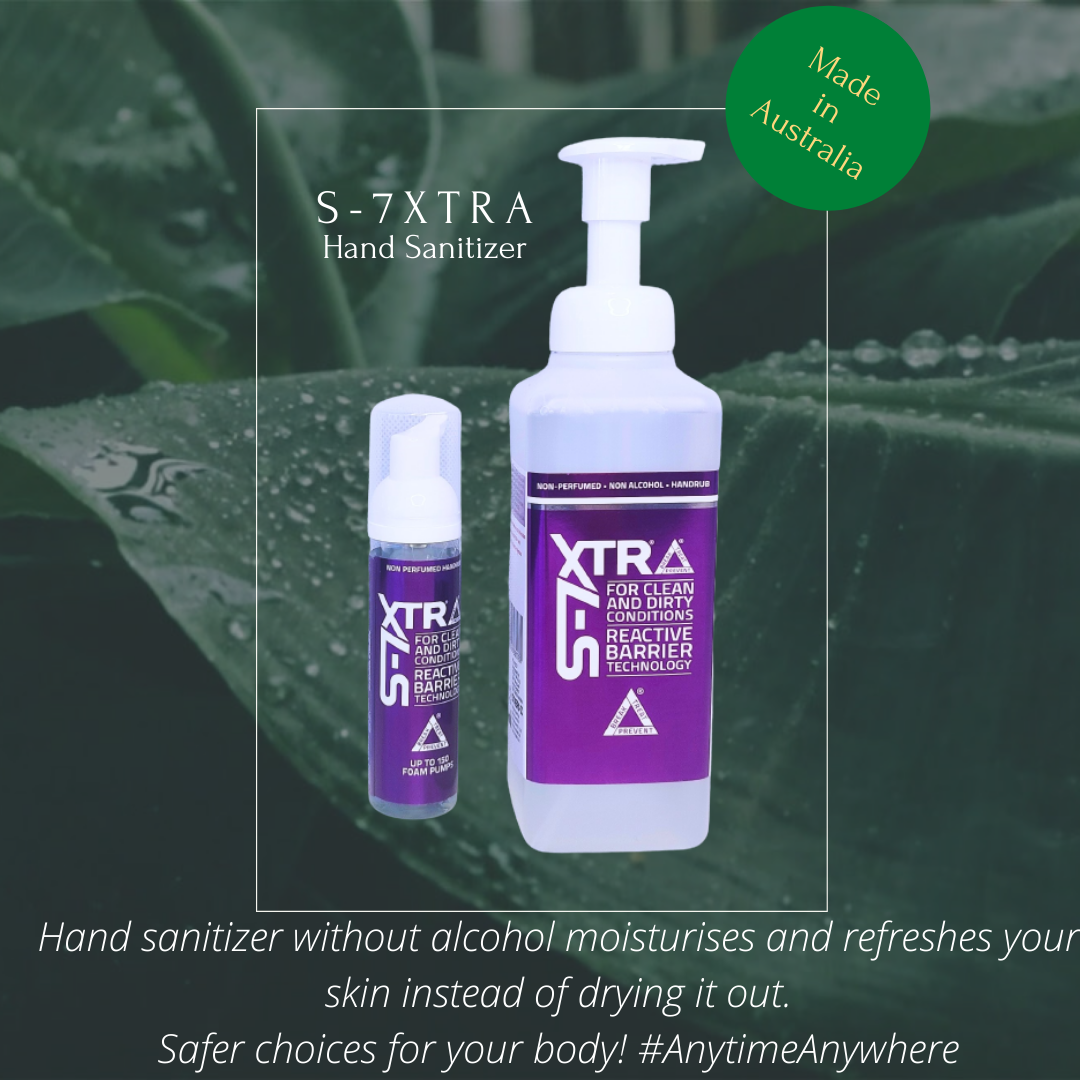
S 7XTRA

Anaeron Explains Hand Sanitisers:

Most alcohol-based hand sanitisers combine isopropyl alcohol, ethanol, or propanol in their formulas. There are also non-alcohol hand sanitisers, but in professional environments (like hospitals), the alcohol versions are prefered because many companies have unproven ingredients that are to date not tested enough to make the same claims as alcohol-based hand sanitisers. 

Hand sanitisers are not effective against all types of pathogens. They do not effectively kill bacterial spores, and certain parasites and viruses are resistant to their use. Hand sanitisers are less effective if they are applied to skin that is contaminated with certain non-harmful chemicals such as grease. They also cannot effectively remove many harmful chemicals, such as paint, pesticides, and chemical fertilizers such as phosphates.

Alcohol-based sanitisers must contain at least 60% alcohol to be effective, but larger concentrations (up to 95%) perform better and are frequently mandated by law for use in safety-sensitive occupations. Hand sanitisers must also be used by particular standards, such as EN 1500, that outline the best ways to utilise them.

Automated dispenser systems are used to distribute a lot of hand sanitisers. By guaranteeing that each person who uses the dispenser receives an effective dose, these are intended to further guarantee effectiveness.

When the COVID-19 pandemic started in 2020, hand sanitisers—which were initially largely used in healthcare settings—became a standard occupational safety practice. Since alcohol-based and some non-alcohol-based hand sanitisers (as shown in studies) can successfully eradicate the COVID-19 virus, many OHS agencies introduced ad hoc regulations or instructions to promote their usage in workplaces as soon as the epidemic started.

Alcohol has been used as an antiseptic or sterilisation component for many years, but only recently has it been the subject of scientific investigation. The first-hand sanitisers were created somewhere in the second half of the 20th century, and they became widely used around the world in the 1980s, especially into the 1990s and the beginning of the 21st century.

Hand sanitisers became common in hospitals around the early twenty-first century, and subsequently became an expected component in 2009 after the World Health Organization (WHO) published official guidelines recommending their use.

Whether or not hand sanitisers are used properly determines how effective they are. A hand sanitiser should be massaged into the skin for 20 seconds for general use, by which time it should have dried. If it is removed before it is completely dry, it will not function as intended.

The hand sanitisation procedure is significantly stricter for surgical applications due to the significance of making sure that as many bacteria as possible are eradicated. The least acceptable application time in this situation is typically 90 seconds, however, in many instances, the sanitiser will be administered for significantly longer.

As part of the requirements for using hand sanitiser during surgery, the product must also adhere to a recognised quality standard, such as EN 12791, and the application procedure itself must follow a recognised hand sanitiser application standard, such as EN 1500. While alternative hand sanitiser standards may be imposed in other jurisdictions, the EN standards are European and are accepted worldwide.

The majority of governmental OHS agencies do not have specific rules that mandate the use of hand sanitisers in general settings because the use of hand sanitisers in the majority of non-medical occupational settings only became widespread after the start of the COVID-19 epidemic in early 2020. As a result, OHS organisations may offer voluntary guidelines to encourage the use of hand sanitiser, enact general duty laws to police its use or rely on court orders presented by public health organisations to serve as a foundation for legal enforcement.

Although alcohol-based hand sanitisers are the most popular and best-known hand sanitisers, non-alcohol-based hand sanitisers may be better suited in some situations, especially if there is a possibility that an environment-borne microorganism that is resistant to alcohol may be present. Triclosan, chlorhexidine gluconate, and chloroxylenol are often found compounds in non-alcoholic hand sanitisers. In circumstances when the presence of alcohol may provide a risk to one's health or safety, non-alcohol hand sanitisers may also be utilised.

To be marketed as a hand sanitiser, a product need only be shown to be effective. Because of this, several governments offer lists of hand sanitisers to stay away from or lists of hand sanitisers that have been deemed to be efficient disinfectants.


S-7XTRA mould removal in Heritage Rail Carriages

Our product finds a wide range of use in the community so it's not farfetched if it's used to renovate and restore historical pieces.


In this article, I want to show you one of the many ways our products are uniquely potent.

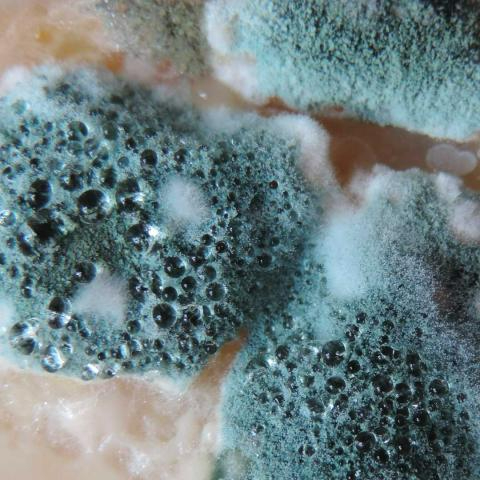
Mould can be incredibly hard to deal with. The degradation of cultural heritage is greatly accelerated by fungi and the enzymes they produce.
Therefore, historical pieces stored inside or outside are in great danger of being attacked by fungi and damaged or even destroyed by it.
Often the mould increase is so quick and strong that traditionally non-hazardous methods just simply can't do the job anymore.

That's why Heights Heritage Conservation reached out to S-7XTRA to finally find a cheap and easy-to-use solution for their GROWING problem. (Get it? Cause mould grows right ?!)

Well, did you know that there are more than 50.000 different species of fungi known to man and several hundred of them have been found to cause significant damage to art all around the world?

While there are ways to store artifacts safely it's tough for a lot of pieces since the only real way to prevent mould from accruing is to store whatever item in a room or container that is free from any water, therefore a room or container would have to be air-dried by around 30°C-40°C which itself can cause harm to a lot of items or damage them significantly. 

So, yes there are prevention solutions for some but not for most!

There are more solutions to this problem but just like the first one, they are a lot harder to implement, cost a lot or are simply non-applicable for most pieces.

So, to get back to the topic what do you then do if your piece, house or whatever it is ended up getting infected with mould and the only way now is to try to find the best way to remove it? 

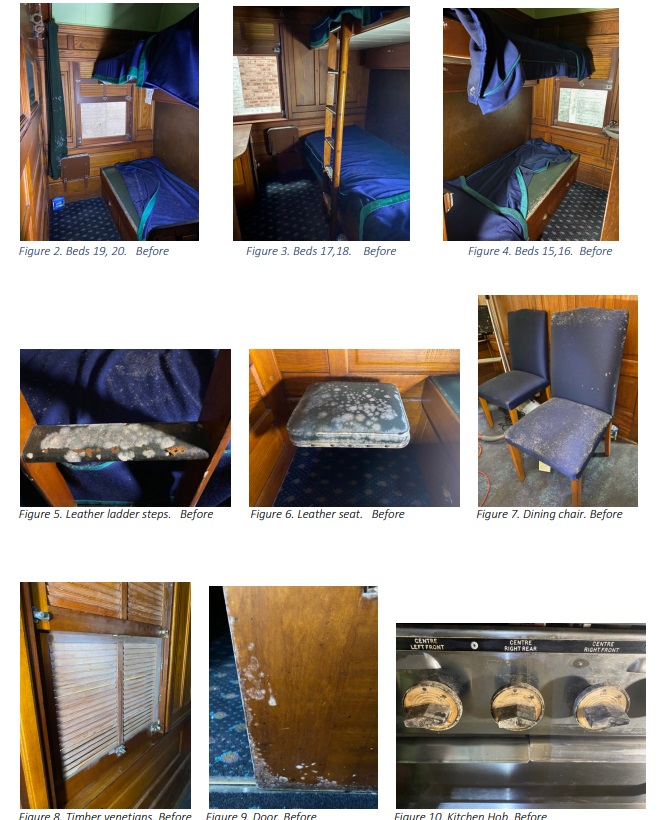
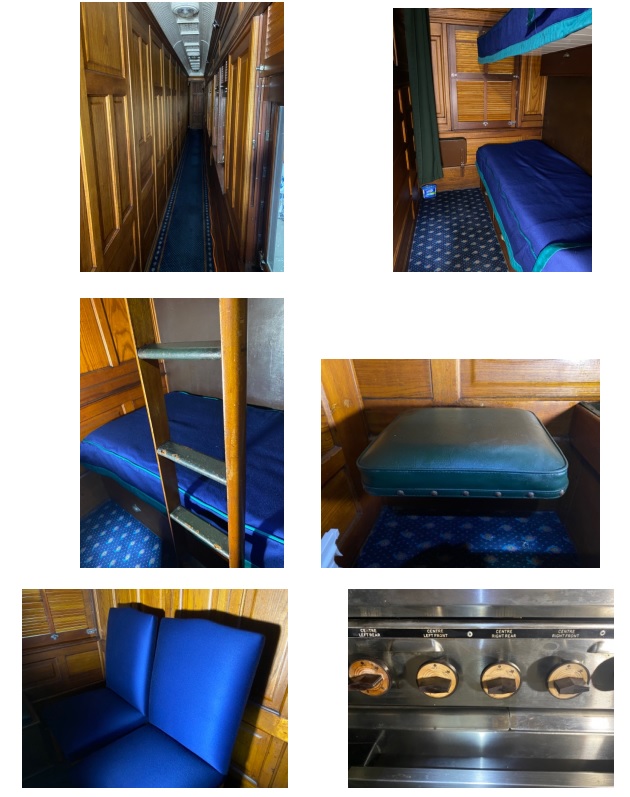
Well, the answer is S-7XTRA before I show you the conclusive result of the restoration process here are some before and after images to show the strength of our product:

before train 2

After train 1

So, yes you can see for yourself what our product is capable of without damaging S-7XTRA was capable of doing the heavy lifting and could remove all the mould.
On top of all that our product comes with reactive barrier technologie to prevent reinfection in between cleanings.

So what are you still waiting for? Got mould problems? Contact Us NOW!

Use of ATP Readings to Predict a Successful Hygiene Intervention in the Workplace to Reduce the Spread of Viruses on Fomites

The purpose of this study was to validate the use of adenosine triphosphate (ATP) for evaluating hygiene intervention effectiveness in reducing viral dissemination in an office environment. The bacterial virus MS-2 was used to evaluate two scenarios, one where the hand of an individual was contaminated and another where a fomite was contaminated. MS-2 was selected as a model because its shape and size are similar to many human pathogenic viruses.

Two separate experiments were conducted, one in which the entrance door push plate was inoculated and the other in which the hand of one selected employee was inoculated. In both scenarios, 54 selected surfaces in the office were tested to assess the dissemination of the virus within the office. Associated surface contamination was also measured employing an ATP meter. More than half of the tested hands and surfaces in the office were contaminated with MS-2 within 4 h. Next, an intervention was conducted, and each scenario was repeated.

Half of the participating employees were provided hand sanitiser, facial tissues, and disinfecting wipes, and were instructed in their use. A significant (p \ 0.05) reduction was observed in the number of surfaces contaminated with virus. This reduction in viral spread was evident from the results of both viral culture and the surface ATP measurements, although there was no direct correlation between ATP measurements with respect to viral concentration. Although ATP does not measure viruses, these results demonstrate that ATP measurements could be use- ful for evaluating the effectiveness of hygiene interventions aimed at preventing viral spread in the workplace.

pdfDownload the full article1MB

Can we help?

Looking for a particular product? We can email or call you to assist.
Invalid Input
please check the box